A lot of people have insight
They understand their patterns. They can name their wounds. They know where their reactions come from. They have read the books, done the therapy, listened to the podcasts, and had the breakthroughs.
And yet, life does not always change at the speed of insight.
Why?
Because change is not only about what you understand. It is also about what your system has the capacity to hold.
You can understand rest and still not be able to soften.
You can understand intimacy and still struggle to stay open when love arrives.
You can understand creativity and still freeze at the threshold of expression.
You can understand your worth and still collapse when something important is at stake.
You can understand your desires and still not know how to live them.
This is where capacity becomes essential.
Not as a performance metric. Not as a way of saying you should be able to handle more. But as a way of understanding the actual space you have inside yourself to remain present with experience without shutting down, fragmenting, overriding, or leaving your own body.
Capacity is not the same as pushing through
Many people mistake capacity for endurance.
They think capacity means doing more, carrying more, producing more, coping better, recovering faster, or staying functional under pressure. But a great deal of what gets praised as capacity is actually adaptation.
A person may be highly productive and deeply disconnected.
They may appear composed while suppressing enormous internal strain.
They may keep delivering, organizing, caregiving, performing, and achieving, while having very little true space inside for feeling, creativity, intimacy, or rest.
That is not necessarily capacity.
Sometimes it is survival dressed as competence.
Real capacity is different.
Capacity is the ability to stay with more of life, more truth, more sensation, more uncertainty, more joy, more grief, more intimacy, more desire, more visibility, more inner movement, without immediately needing to shut it down or turn away.
It is about range.
It is about resilience with contact.
It is about being able to remain more fully here.
Why people lose capacity
Capacity narrows for good reasons.
When the system has been under chronic stress, emotional neglect, trauma, instability, over-responsibility, relational pain, or prolonged self-abandonment, it often becomes more efficient at protection than presence.
That means less room.
Less room for ambiguity.
Less room for pleasure.
Less room for creativity.
Less room for disappointment.
Less room for rest.
Less room for desire.
Less room for closeness.
Less room for change.
Then life starts feeling tight.
A person may still function, but they function inside a smaller inner field. They can manage what is familiar, but anything extra, even something beautiful, can start to feel like too much.
This is one of the great misunderstandings of healing. People assume they are failing when they cannot hold more. But often the issue is not failure. It is that the system has adapted by narrowing.
Creativity needs more than talent
This is also where creativity comes in.
Creativity is often spoken about as gift, talent, originality, artistic skill, or inspiration. But creativity is also a capacity issue.
To create, a person often needs to tolerate uncertainty.
They need to tolerate imperfection.
They need to risk visibility.
They need to stay present through self-doubt.
They need to remain in contact with desire long enough to make something from it.
They need to let something come through before they fully know what it is.
That requires capacity.
A person can be deeply creative and still unable to create consistently because their system does not yet feel safe enough to stay open through the exposure, vulnerability, and unpredictability that creativity involves.
This is why creative blocks are not always about discipline. Sometimes they are about nervous system thresholds, self-protection, inner fragmentation, or the inability to stay connected to one’s own signal under pressure.
Integration is not the same as knowing better
Integration is another word people use often, sometimes too loosely.
Integration is not just having new information.
It is not having a profound session and then talking about it well.
It is not collecting insights and arranging them into a beautiful self-concept.
Integration is when something begins to organize differently in lived experience.
It means the insight starts reaching behavior.
It means the body starts responding differently.
It means the old pattern does not run quite as automatically.
It means more of the self can remain present in moments that once caused collapse, panic, shutdown, or self-erasure.
Integration takes time because it requires repetition, contact, and actual lived embodiment.
It is not instant.
It is not glamorous.
But it is real.
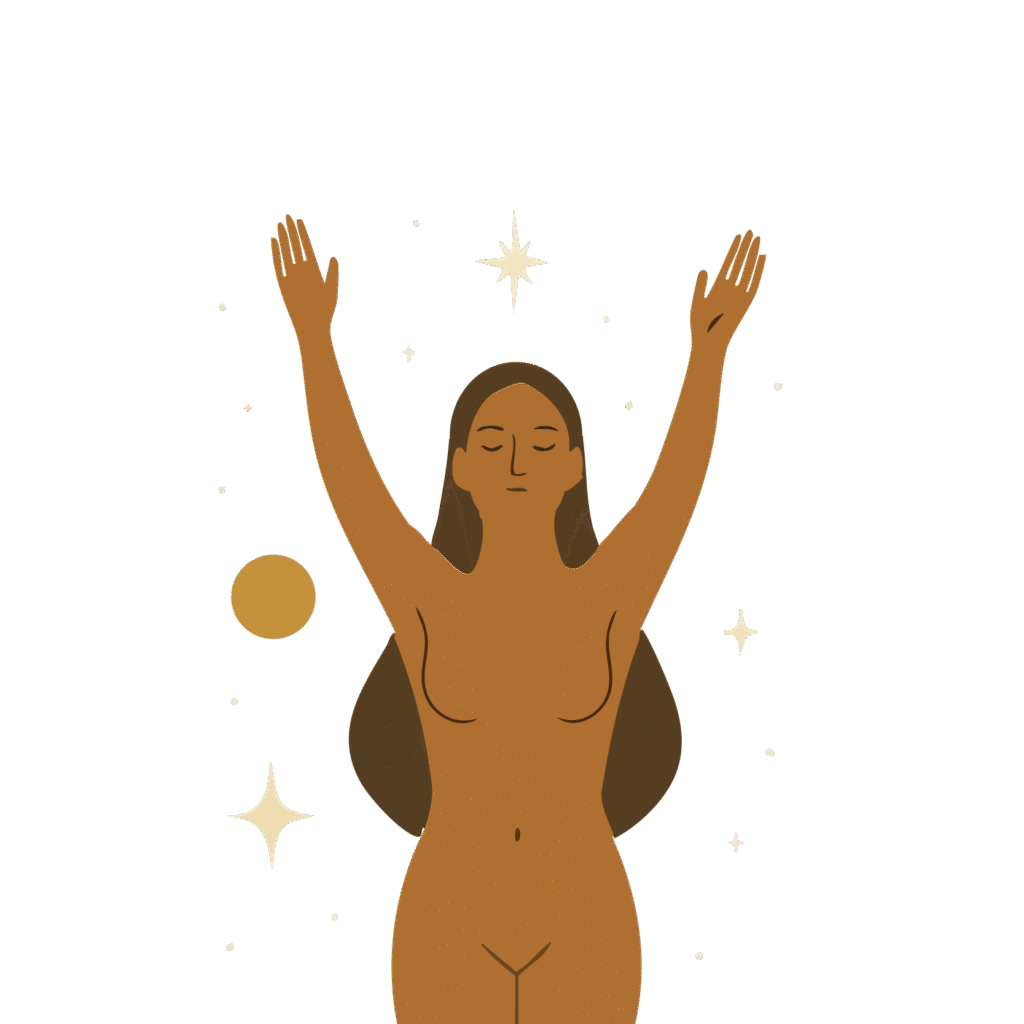
Why growth can feel destabilizing
One reason people struggle with growth is that expansion itself can feel intense.
More joy can feel vulnerable.
More visibility can feel dangerous.
More intimacy can feel exposing.
More desire can feel destabilizing.
More freedom can feel disorienting.
More self-trust can awaken grief for all the times it was missing.
So even positive change can activate defense.
A person may say they want a bigger life, but when life begins to widen, the system may respond with fear, confusion, self-sabotage, exhaustion, or retreat.
That does not mean the growth is wrong.
It means expansion requires support.
The system has to learn that it is safe not only to survive, but to receive, create, express, and inhabit more.
Fragmentation makes life harder to hold
A great deal of suffering comes from inner fragmentation.
One part wants love. Another part distrusts it.
One part wants to create. Another part wants to hide.
One part wants rest. Another part does not feel safe unless it is producing.
One part wants truth. Another part fears what truth will cost.
One part longs to open. Another part is guarding the door.
This is normal.
Human beings are not simple. But without integration, these parts can pull against each other in ways that make life confusing, exhausting, or chronically stalled.
Integration does not mean becoming one flat, unified version of yourself with no contradiction. It means developing enough relationship between the parts that they do not have to sabotage each other so dramatically.
It means more inner coherence.
More conversation.
More mutual recognition.
More ability to stay with complexity without splitting apart.
Expansion begins with honesty about what is here
Transformation is not complete when something is understood. It becomes real when it can be lived.
In The Sensual Hero’s Journey™, The Capacity, Creativity & Integration domain explores how much of life a person can actually hold, how creativity depends on nervous system and emotional capacity, and how healing becomes integrated into action, relationship, expression, and daily reality.
It asks questions like:
How much truth can you stay present with?
How much pleasure, visibility, intimacy, or uncertainty can your system currently hold?
Where does life start narrowing in you?
What becomes unavailable when you are under strain?
What part of you wants to create, and what part is protecting you from exposure?
What have you understood intellectually that has not yet reached the body?
What would integration look like in lived experience, not just in language?
These questions matter because many people mistake knowing for becoming.
But becoming asks more of us.
It asks for contact.
It asks for repetition.
It asks for room.
The goal is not to become infinite.
Not to transcend all limits.
Not to turn healing into another performance of mastery.
The goal is to become more honest about what your system can currently hold, and then to widen that capacity with care.
To notice when you leave yourself.
To recognize when a creative threshold becomes a protection threshold.
To understand when “I’m blocked” actually means “something in me does not yet feel safe enough.”
To feel when life is asking you to grow, and when your system is asking for slower pacing and deeper support.
To let integration be something lived, not just admired.
This is where real change deepens.
Not in dramatic declarations.
But in the gradual ability to hold more of yourself, more of life, and more of what you truly want, without abandoning yourself in the process.